

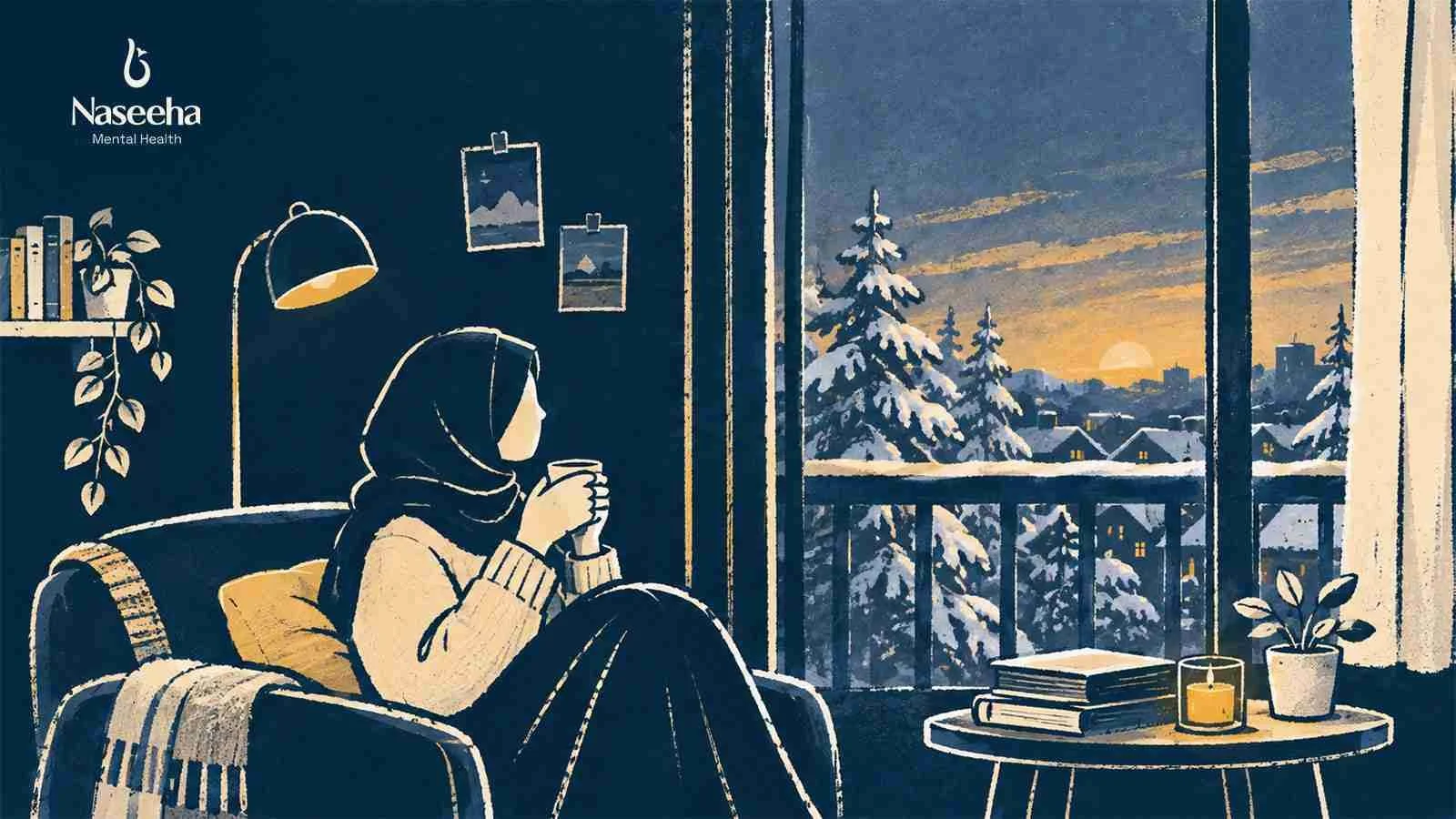
The winter blues tend to show up right after the clocks go back. It’s dark by 5 pm, sometimes before you’ve even left work. Your bed is harder to leave than it was in September, plans can wait until spring, and you keep reaching for toast and pasta.
Winter blues are a mild, temporary dip in mood and energy that comes with shorter days and colder weather. They’re common, and they don’t mean something is wrong with you. Small daily habits, like getting some morning light and keeping a steady bedtime, can make a real difference.
This guide looks at the signs of winter blues, why they happen, and what you can do to feel better during the colder months. It also explores how winter can affect relationships and why staying connected matters.
What Are the Winter Blues?
Winter blues are a temporary change in mood, energy and motivation that some people experience as daylight hours get shorter. Mornings feel harder, everyday plans take more effort, and staying home starts to sound better than going out. It's a mild seasonal dip, not a medical condition. You might come across the phrase "winter blues disorder" online, but winter blues aren't a formal diagnosis.
Part of it comes down to your circadian rhythm, your body's internal clock that tells you when to sleep and wake up. Less daylight can throw that clock off, affecting your sleep and energy levels. It usually creeps in slowly. A few rough mornings. Saying no to a dinner you'd normally go to. Before long, you might notice that things you usually enjoy take more effort.
Common Signs of the Winter Blues
Winter affects everyone differently. Some people notice physical changes, while others experience differences in their mood, motivation or social habits.
Here are a few common signs to recognize.
-
Low Energy and Heavy Limbs
You're tired even after a full night's sleep. Cooking dinner, doing the dishes, or getting ready for work can feel like a lot.
-
Sleeping More or Struggling to Wake Up
Dark mornings make getting out of bed harder. You might sleep longer than usual or feel sleepy throughout the day.
-
Carb and Comfort Food Cravings
You find yourself reaching for bread, pasta, sweets or other comfort foods more often. Changes in appetite can accompany seasonal mood changes.
-
Irritability and Low Motivation
You get frustrated more easily or find it harder to concentrate. Even small tasks can feel like extra work.
-
Pulling Back from People
You turn down invitations, take longer to reply to messages or prefer staying home. Even meeting a friend for tea can feel like too much effort.
Winter Blues vs Seasonal Depression (SAD)
People often use these terms as if they mean the same thing, but they don't. Seasonal affective disorder (SAD) is a type of depression that follows a seasonal pattern. According to the Canadian Psychological Association (CPA), symptoms commonly appear during fall and winter and improve as the seasons change. The main difference between winter blues and SAD is how severe the symptoms are and how much they affect your everyday life.
Usually winter blues
- Mild changes in mood and energy
- Everyday responsibilities remain manageable
- May come and go
- You can still enjoy your usual activities
May be SAD
- Persistent depressive symptoms
- Affects work, school or relationships
- Follows a recurring seasonal pattern
- Loss of interest, hopelessness or withdrawal
How common are these seasonal mood changes? Estimates vary depending on how winter blues and SAD are defined. CMHA's national page reports that around 15% of people in Ontario experience winter blues, while approximately 2% experience seasonal affective disorder. The CPA also estimates that 2 to 3% of Canadians experience more serious seasonal symptoms during their lifetime.
These figures are estimates, but they show why winter mood changes are worth paying attention to, even when they don't meet the criteria for depression. This comparison is a general guide, not a diagnosis. If your symptoms last for weeks or begin affecting your daily life, speak with a healthcare professional.
Why Winter Affects Your Mood
A few things start working against you once the days get shorter. Less daylight, changes to your sleep routine and spending more time indoors can all affect how you feel.
- Less daylight
- Canadian winter days are shorter, and many people spend less time outdoors. Less exposure to natural light can affect your mood, energy and sleep.
- Changes to your body clock
- Natural light helps regulate your circadian rhythm. When daylight hours change, your sleep-wake cycle can shift too, making mornings harder.
- Serotonin and melatonin
- Changes in daylight can influence serotonin, which helps regulate mood, and melatonin, which helps your body know when it's time to sleep. These chemicals play a role in your sleep and mood patterns.
- Canada's northern location
- The farther you live from the equator, the shorter winter days become. People living in northern regions experience greater seasonal changes in daylight, which can increase the risk of seasonal affective disorder.
- Year-end pressure
- The end of the year can bring financial responsibilities, family expectations and changes to your usual routine. Being away from loved ones or having fewer people around can make the colder months feel more isolating.
These factors don't affect everyone in the same way. Your daily routine, surroundings and personal circumstances all play a part.

When Do the Winter Blues Start and End?
There's no set date. Winter blues often start in late fall, when daylight hours become shorter, and can become more noticeable as winter goes on. For many people, they ease in spring as the days get longer.
So, is there a worst month? Not for everyone. Some people notice their mood getting lower through January and February, once the year-end period has passed and the cold weather has settled in. But the timing varies from person to person.
You've probably also heard of Blue Monday, the third Monday of January, supposedly the most depressing day of the year.The CMHA describes it as a myth that started as a marketing idea to sell holidays, rather than a scientifically established mental health event. Winter blues are a real experience, but they can't be reduced to one particular day.
How to Beat the Winter Blues
You don't need to make major lifestyle changes to start feeling better. Sometimes, a few manageable habits can make your daily routine feel more comfortable and structured.
Here are six practical ways to look after yourself during winter.
-
Get Some Daylight Early in the Day
Try to spend some time outside during daylight hours, especially in the morning. Even a 10-minute walk around your neighbourhood can help you get some natural light. If going outside isn't possible, open the curtains or sit near a window while you have breakfast.
-
Maintain a Consistent Sleep Schedule
Dark mornings make it tempting to stay in bed longer. Try to go to bed and wake up around the same time every day. You can also make mornings easier by preparing your clothes or packing your bag the night before.
-
Move Your Body Regularly
You don't need a gym membership or an intense workout to stay active. Walking, stretching, dancing at home or following a short exercise routine can all help. Find something you enjoy and make it part of your week.
-
Eat Regular, Balanced Meals
You might crave bread, pasta or other comfort foods more often during winter. Instead of feeling guilty about it, focus on eating regular meals that include vegetables, fruit, whole grains and protein. Having a few meals planned ahead can also make things easier on busy days.
-
Make Time for Social Connections
When you're feeling low, meeting people can feel like another task on your list. Start small. Call a friend, have tea with your mom, or plan a short visit with someone you haven't seen in a while. Even one social plan each week gives you something to look forward to.
-
Create a Routine for Dark Evenings
Long winter evenings can feel even longer when you have nothing planned. Find a few things you enjoy doing at home, whether that's reading, preparing dinner, working on a hobby or making time for prayer. Having something to look forward to can make evenings feel less repetitive.
Does Light Therapy Help?
Light therapy is one of the main treatments for seasonal affective disorder (SAD). It uses a special light box that provides much brighter light than an ordinary household lamp. According to HealthLink BC, bright light therapy is an effective treatment for SAD.
How to Use a Light Box
Most guidance recommends a light box that provides 10,000 lux of light. It is generally used for about 20 to 30 minutes in the morning, ideally within the first hour after waking up.
- 10,000 luxrecommended light strength
- 20–30 mineach morning
- 16–24 infrom your face, but check your device
- 1st hourafter waking up
Place the light box at the distance recommended by the manufacturer. Some devices are designed to sit around 16 to 24 inches from your face, but this can vary. Let the light reach your eyes while you read, eat breakfast or get ready for the day. Keep your eyes open, but don't look directly into the light.
Choose a light box specifically designed for SAD treatment and check that it filters out ultraviolet (UV) light. Follow the manufacturer's instructions, as the recommended distance and exposure time can vary between devices.
Light therapy isn't suitable for everyone. If you have an eye condition or take medication that makes you more sensitive to light, speak with your healthcare professional before starting. They can help you decide whether light therapy is appropriate and how to use it safely.
Some people also use sunrise alarms and daylight lamps as part of their morning routines. Vitamin D supplements are another common topic during winter, but they aren't a standalone treatment for seasonal depression. If you're concerned about vitamin D deficiency, speak with a healthcare professional before starting supplements, especially high doses.
Winter Blues for Muslims in Canada
For some Muslims living in Canada, winter can bring additional challenges, especially when they're adjusting to life in a new country or living away from family. Shorter days, colder weather and fewer opportunities to spend time with others can make it harder to stay connected. If you're still building a community or don't have family and close friends nearby, winter can feel particularly lonely.
Your daily routine can also change during the colder months. In winter, Fajr comes later and Isha comes early, which gives the day a few fixed points to build around. Keeping familiar routines can help bring some structure to days that might otherwise feel long.
At the same time, you don't have to choose between faith and getting support. Spiritual practices can be an important source of comfort, and speaking with someone you trust or a mental health professional is also a valid way to look after yourself.
Winter Blues in Relationships and Families
Low energy and social withdrawal can sometimes be misunderstood in relationships. A partner who becomes quieter or less interested in social activities may appear to be pulling away when they're actually struggling with their mood.
Instead of making assumptions, try having an open conversation and asking how they are feeling. Understanding the signs of stress in a relationship and recognizing why men sometimes wait to talk about stress can help families approach these changes with greater patience.
When to Get Support
Sometimes what feels like a seasonal dip needs more attention. Consider speaking with a healthcare professional if:
- Your low mood lasts for several weeks.
- Your sleep, work, studies or relationships are being affected.
- You've lost interest in things you usually enjoy.
- You feel persistently sad, hopeless or withdrawn.
If you're thinking about harming yourself or are in immediate danger, call 911. You can also call or text 9-8-8, Canada's Suicide Crisis Helpline, at any time.
There are different ways to treat seasonal depression. The Canadian Mental Health Association (CMHA) and the Centre for Addiction and Mental Health (CAMH) identify options such as light therapy, counselling and medication. A healthcare professional can help you understand what might work for you. You don't have to wait until things feel overwhelming to ask for support.
Frequently Asked Questions
What is the meaning of winter blues?
Winter blues describe a mild, temporary change in mood, energy and motivation that some people experience during colder months. Shorter days and reduced exposure to natural daylight can contribute to these feelings.
Are winter blues a real thing?
Yes. Winter blues are a commonly recognized experience of seasonal changes in mood and energy. They are generally milder than seasonal affective disorder (SAD), which is a form of depression.
What is the difference between winter blues and SAD?
Winter blues usually involve mild changes in mood and energy that don't significantly affect everyday responsibilities. SAD is a form of depression that can cause persistent symptoms, including low mood, changes in sleep and appetite, and loss of interest in activities.
How do you beat the winter blues?
Get some daylight early in the day, keep the same sleep and wake times, move your body most days, eat regular meals and plan one social activity each week. If low mood lasts for weeks or affects your daily life, speak with a healthcare professional.
How long do winter blues last?
There is no fixed duration. Some people notice changes for a short period, while others experience them throughout much of the colder season. Symptoms often improve as daylight returns in spring. If they persist or worsen, speak with a healthcare professional.
What month is seasonal depression the worst?
There is no universally worst month. Winter-pattern SAD often begins in late fall or early winter, with symptoms potentially becoming more noticeable during the middle of winter. Individual experiences may vary.
Is seasonal depression real?
Yes. Seasonal Affective Disorder is a recognised type of depression. According to CAMH, it involves recurring depressive symptoms during particular seasons, most commonly fall and winter.
Can vitamin D help?
Vitamin D plays an important role in overall health, but supplements are not an established standalone treatment for seasonal depression. If you are concerned about a deficiency, speak with a healthcare professional before starting supplementation.
Reach the Naseeha Helpline Any Time
You don't need to be in crisis to call. Saying "I feel low and I don't know why" is enough to start a conversation.
Call 1 (866) 627-3342Naseeha's helpline is open 24 hours a day, seven days a week, and it's free and confidential. A peer counsellor will answer, someone who'll listen without judgment, and you don't have to have it all figured out first.
If you'd like ongoing support, Naseeha also offer online therapy with licensed Muslim therapists across Canada.
If you or someone you know is in immediate danger, call 911. For suicide-related concerns or emotional distress, call or text 9-8-8.
